
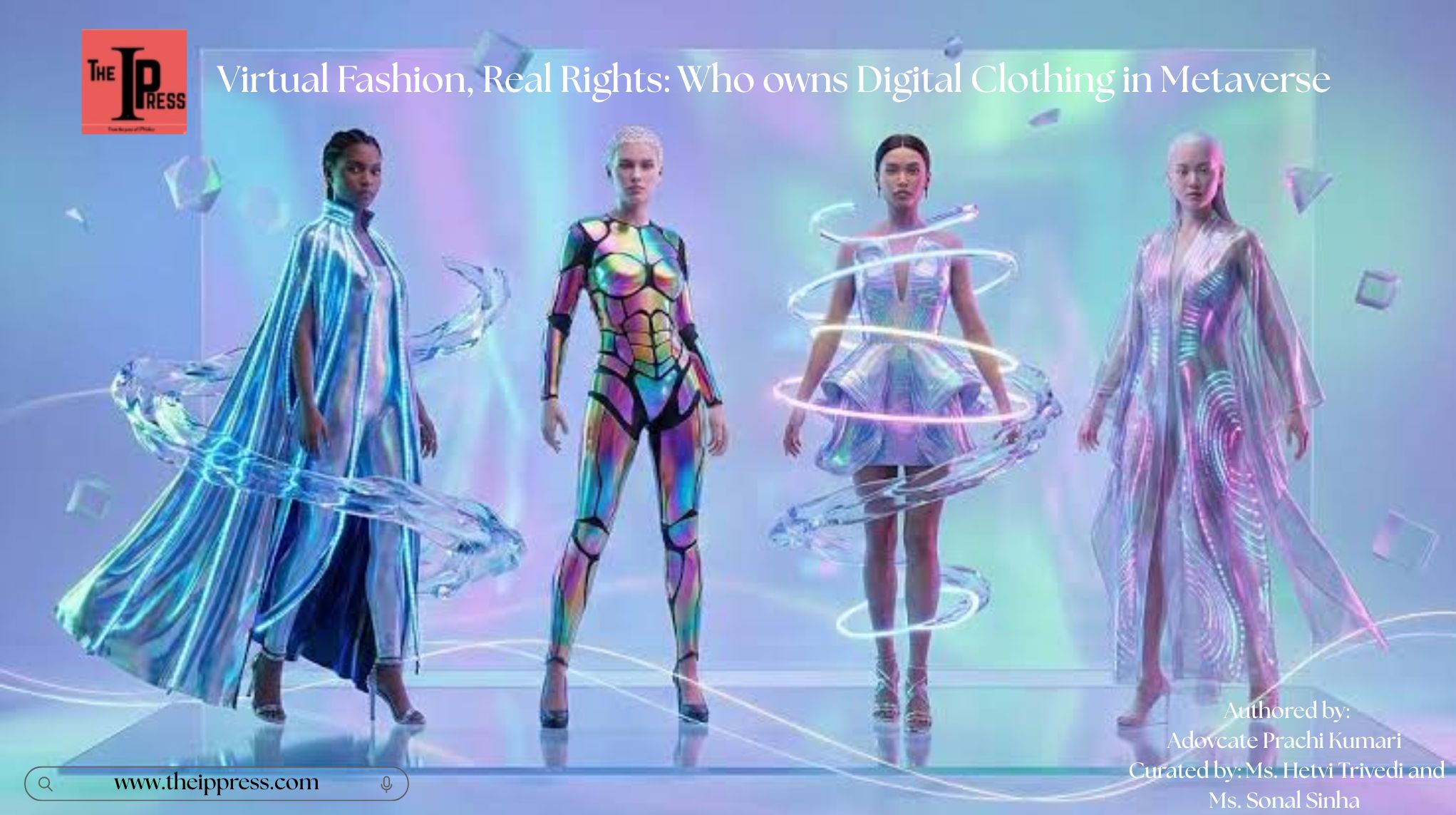
Imagine buying a designer outfit for your avatar, only to discover that someone has copied it, altered the logo, and started selling it on another platform. No physical fabric. No stitching. Just a digital file and a very real legal problem.
Welcome to virtual fashion, where technology is changing how we create, buy, sell, and experience clothing. But behind every digital outfit lies a bigger question: When fashion moves into the virtual world, are our existing laws ready to move with it?
When Digital Fashion Meets Real Rights
Virtual fashion is not just about 3D designs. It involves digital marketplaces, software platforms, user accounts, licensing systems, and sometimes blockchain-based transactions. Each layer can raise different legal issues.
Consider a freelance designer hired to create virtual clothing for a gaming company. Who owns the design? Can the company modify it? Can the designer reuse it elsewhere? What happens if the platform uses the design beyond the original agreement?
These questions cannot be answered by looking at the technology alone. They require a combination of intellectual property law, contract law, and an understanding of how digital platforms operate.
The practical lesson: Every virtual fashion project needs clear terms covering ownership, licensing, permitted use, modification, distribution, and commercial exploitation.
The Birkin Bag That Never Existed
The Hermès International v. Rothschild dispute shows how traditional intellectual property principles can apply to digital products.
Mason Rothschild created digital images of fur-covered handbags called “MetaBirkins.” Hermès alleged that the project infringed and diluted its trademark rights. In 2023, a jury found Rothschild liable on trademark-related claims.[1]
Why does this matter to technology law?
Because digital marketplaces can make it easy to create, distribute, and monetise virtual products, but they do not automatically remove the legal responsibilities associated with branding. Calling something a digital collectible or selling it through an NFT does not, by itself, place it outside trademark law.
For technology companies and marketplace operators, this raises practical questions about intellectual property complaints, counterfeit digital products, seller policies, and procedures for responding to infringement claims.
However, context matters: using a brand reference in digital art does not automatically establish infringement. The relevant facts and applicable legal principles must be considered.
NFTs, Smart Contracts, and the Ownership Confusion
Suppose you purchase an NFT linked to an exclusive digital jacket. You own the token but do you own the design?Not necessarily.
An NFT can establish a record associated with a digital asset, but ownership of the token does not automatically transfer copyright in the underlying artwork. The rights available to the buyer depend on the relevant licence and contractual terms.
This is where technology law intersects with commercial contracting.
A well-drafted digital fashion licence should address:
- Usage rights: Can the outfit be worn only on one platform, or across multiple virtual environments?
- Modification: Can buyers customise or remix the design?
- Commercial use: Can the digital garment be used in advertisements or commercial projects?
- Resale and transfer: Can the token and associated licence be transferred to another buyer?
- Platform failure: What happens to access rights if the marketplace shuts down?
Smart contracts may automate certain transactions, but automation does not eliminate the need to understand the underlying legal obligations. A transaction that executes successfully in code may still give rise to contractual disputes.[2]
Who Is Responsible When Things Go Wrong?
Digital fashion often involves several parties: the designer, brand, AI provider, marketplace, blockchain network, and end user. When a dispute arises, identifying the responsible party can become complicated.
A marketplace might receive complaints about counterfeit virtual clothing. A buyer might lose access to a purchased garment after a platform update. A designer might discover that a digital asset is being reproduced without permission.
Depending on the facts, the issues may involve intellectual property infringement, contractual obligations, consumer protection, intermediary liability, or data protection.
India’s Information Technology Act, 2000, and the applicable rules may be relevant to certain platform-related issues. [3]The Consumer Protection Act, 2019, may also matter where consumer transactions are involved. The application of these laws depends on the nature of the platform, the transaction, and the dispute.[4]
For businesses, the better approach is preventive: establish clear marketplace terms, transparent licensing conditions, complaint-handling procedures, and appropriate records of digital transactions.
A Practical Checklist for Virtual Fashion Businesses
Before launching a digital collection, creators and businesses should ask:
- Have ownership and licensing rights been documented?
- Are brand names, logos, and third-party designs being used lawfully?
- Do AI tools and external platforms permit the intended commercial use?
- Are NFT ownership and underlying intellectual property rights clearly distinguished?
- Do customer terms explain usage, modification, resale, and access restrictions?
- Is there a process for handling infringement complaints and resolving disputes?
These questions connect Virtual Clothing with the commercial realities of digital fashion. They also help prevent avoidable disputes before a virtual product reaches the marketplace.
The Future Is Digital. The Legal Risks Are Real.
Virtual fashion demonstrates how technology can transform an industry without making its legal obligations disappear.
The challenge for India is not simply to regulate emerging technologies. It is to apply existing legal principles thoughtfully, recognise the limits of current frameworks, and develop clearer practices for digital licensing, AI-assisted creation, and platform accountability.
For lawyers, this field demands more than familiarity with statutes. It requires understanding how digital products are created, how platforms monetise them, and how contractual rights operate across technology ecosystems. After all, a digital outfit may exist only on a screen but the ownership disputes, commercial losses, and legal responsibilities behind it are very real.
[1] Hermès International v. Rothschild ,654 F. Supp. 3d 268 (S.D.N.Y. 2023); post-trial opinion and order dated June 23, 2023.
[2] EUIPO, Trade Mark Guidelines — Virtual GoodsGuidance on classifying virtual clothing and other digital goods.
[3] Information Technology Act, 2000 (India) -Section 79: Conditional exemption from intermediary liability.
[4] Consumer Protection Act, 2019 (India)
Authored by: Advocate Prachi Kumari